Simulation
Drivetrain Efficiency Measurement Error Analysis
A rigorous error analysis of in-field bicycle drivetrain efficiency measurements using commercial power meters and timing equipment, establishing the minimum conditions under which such measurements are statistically meaningful.
Links & Resources
The Question
Since the publication of the Classified PowerShift hub efficiency white paper, a stream of questions has arrived from cyclists and journalists about in-field drivetrain efficiency measurements conducted with consumer power meters and a stopwatch. The enthusiasm is welcome — experimental curiosity applied to real hardware always is — but it raises a precise question: under what conditions can such a field measurement actually resolve a real efficiency difference rather than noise? The drivetrain industry's reliance on controlled laboratory test rigs exists for concrete reasons.
Sources of Uncertainty
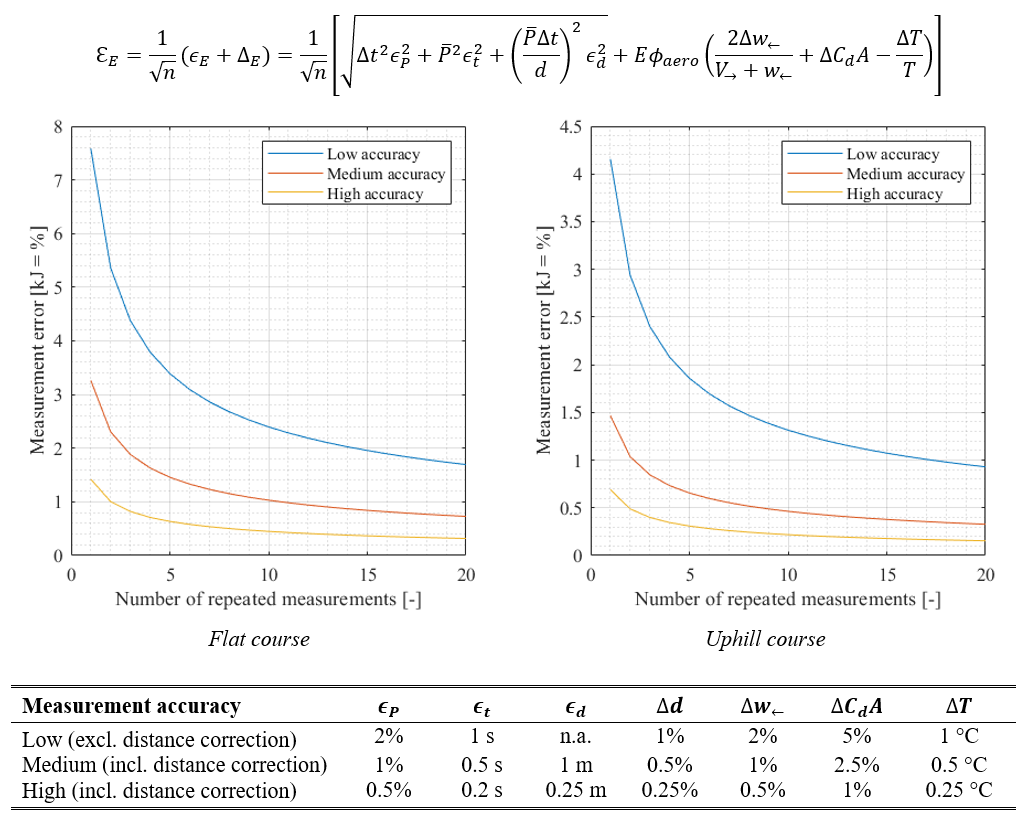
This technical brief presents a formal error analysis of in-field bicycle drivetrain efficiency measurements made with commercially available sensors. It addresses the main sources of measurement uncertainty: power-meter accuracy and drift, environmental variability (wind, gradient changes, temperature), cadence-measurement resolution, and the statistical problem of separating a real efficiency difference from noise.
Minimum Detectable Difference
From these uncertainty sources, the analysis derives expressions for the minimum detectable efficiency difference as a function of measurement duration, road conditions, and sensor quality. It then translates them into practical recommendations: minimum measurement duration, recommended course characteristics, sensor calibration requirements, and the conditions under which a measured difference between two drivetrain configurations is statistically defensible.
What It Means for Field Tests
In-field measurements are not worthless — they can be meaningful when conducted carefully — but "carefully" has a specific technical meaning, and many reported comparisons in cycling media fall short of it. Understanding the error floor of a measurement is as important as the measurement itself. The full derivation is available as a public technical brief for cyclists, journalists and engineers who want to conduct or evaluate these measurements with appropriate rigor.
Related work