Toolkit
Tools & Methods
From physics to algorithms.
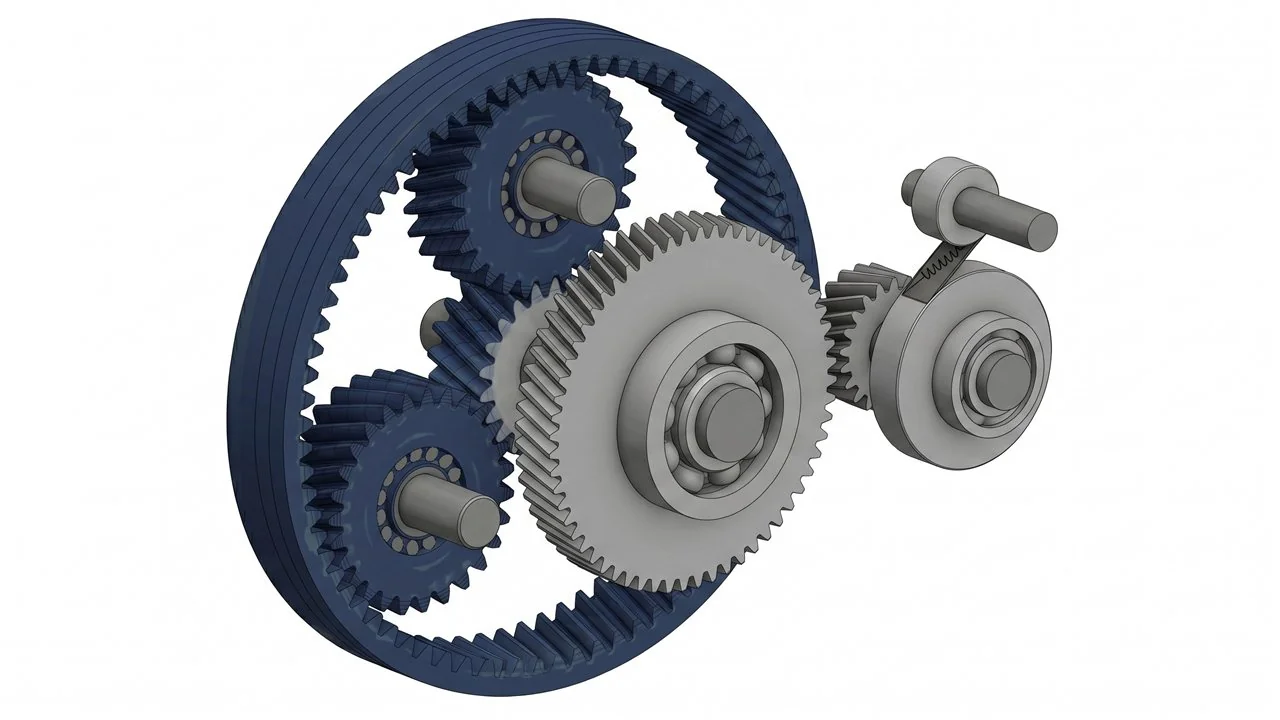
Flexible MBD & FEA
Structural dynamics of mechanisms
Rigid multibody dynamics describes motion; finite element analysis describes deformation and stress; flexible MBD combines both, letting elastic deformation feed back into the behaviour of the complete system. This becomes essential when a bearing ring creeps inside its housing, a gearbox generates dynamic transmission error, a barbell deflects under load, or a drivetrain responds to a transient event. Depending on the problem, models may be linear or geometrically nonlinear, include contact and friction, and are often coupled to reduced-order descriptions to keep the computation practical.
View simulations →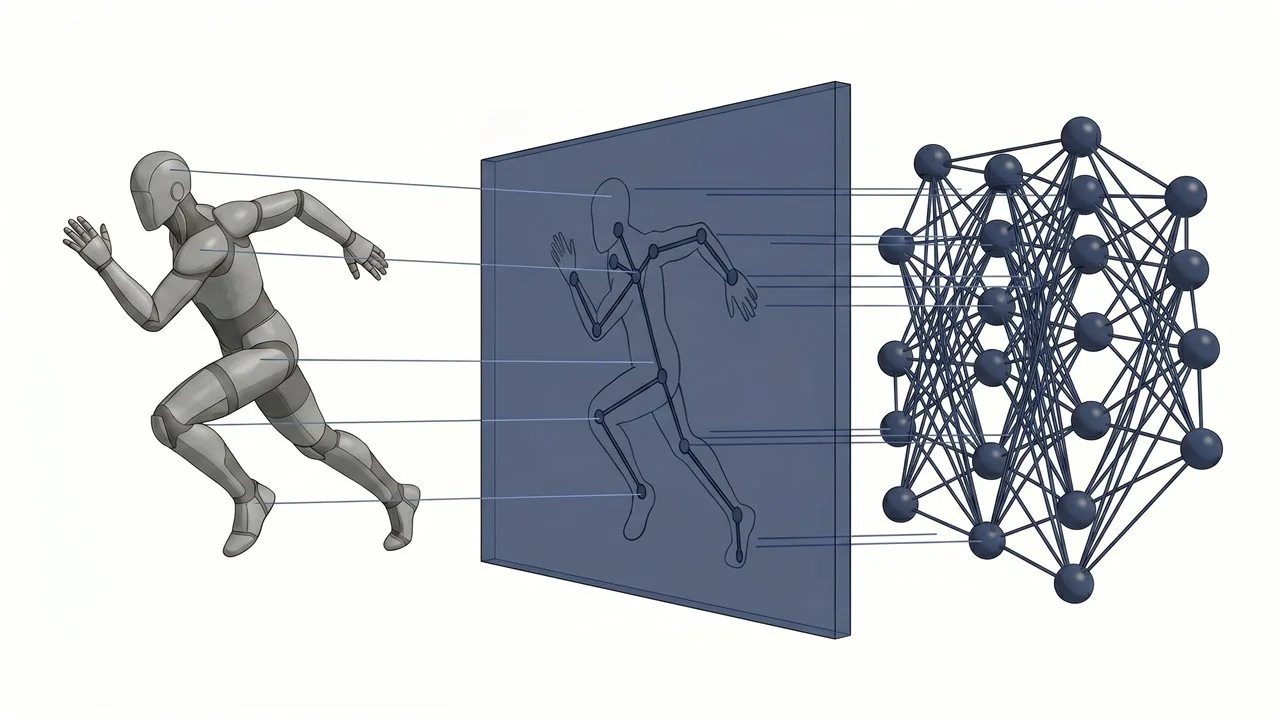
ML & AI
Data-driven sensing and modelling
Machine learning and computer vision are used here not to replace physics, but to extract what would otherwise be difficult to obtain: segmenting athletes in video, reconstructing 3D geometry from images, identifying system dynamics from measurements, or building surrogate models fast enough to embed in an optimization loop. In several projects, AI acts as the sensing or identification layer around a physics-based model — turning a camera into an aerodynamic sensor or a training log into a dynamic model of human performance. The most useful results come from combining these techniques with domain knowledge, feature engineering, and physical constraints.
View simulations →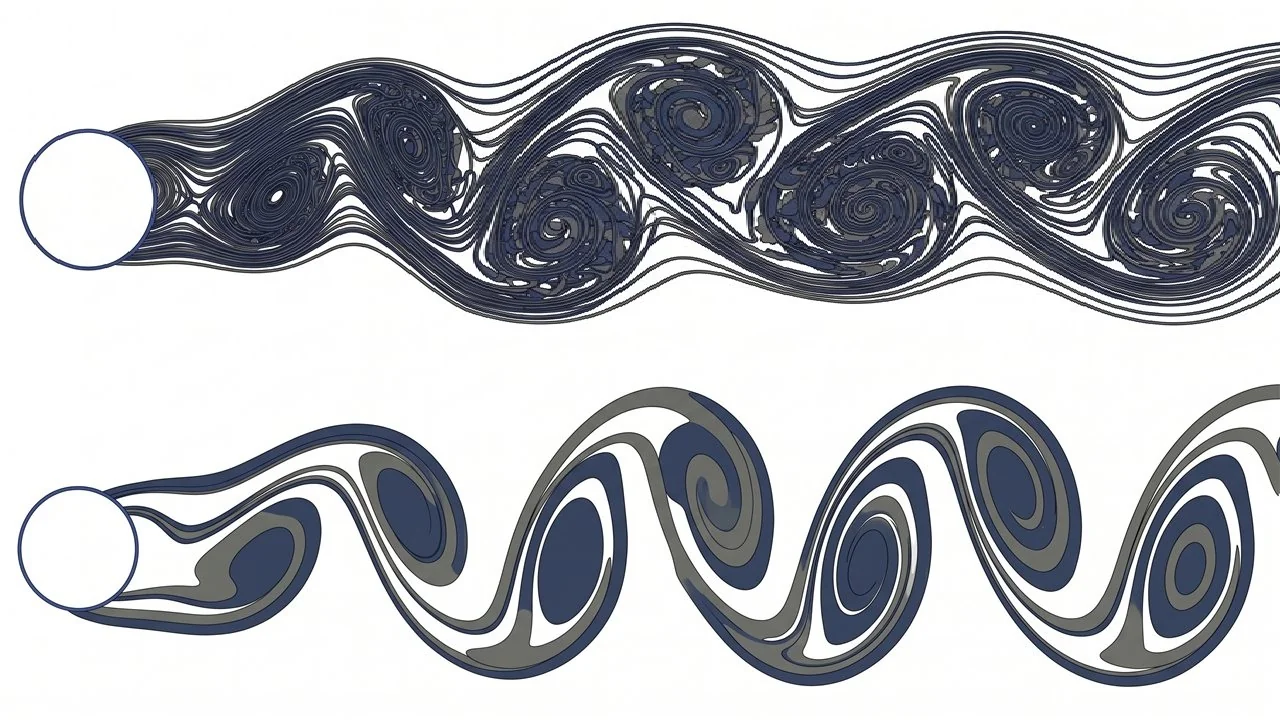
Model reduction
Fast simulation without losing physics
Model reduction is used when full simulation is too expensive for the question being asked — in real-time control, design optimization, or many-query settings where the same model runs thousands of times. Projection-based methods reduce degrees of freedom by finding compact, physically meaningful deformation subspaces; hyperreduction techniques like DEIM address the separate bottleneck of evaluating expensive nonlinear contact or friction forces. The goal is not to make models small, but to identify and preserve exactly the deformation mechanisms and force patterns that determine the output of interest.
View simulations →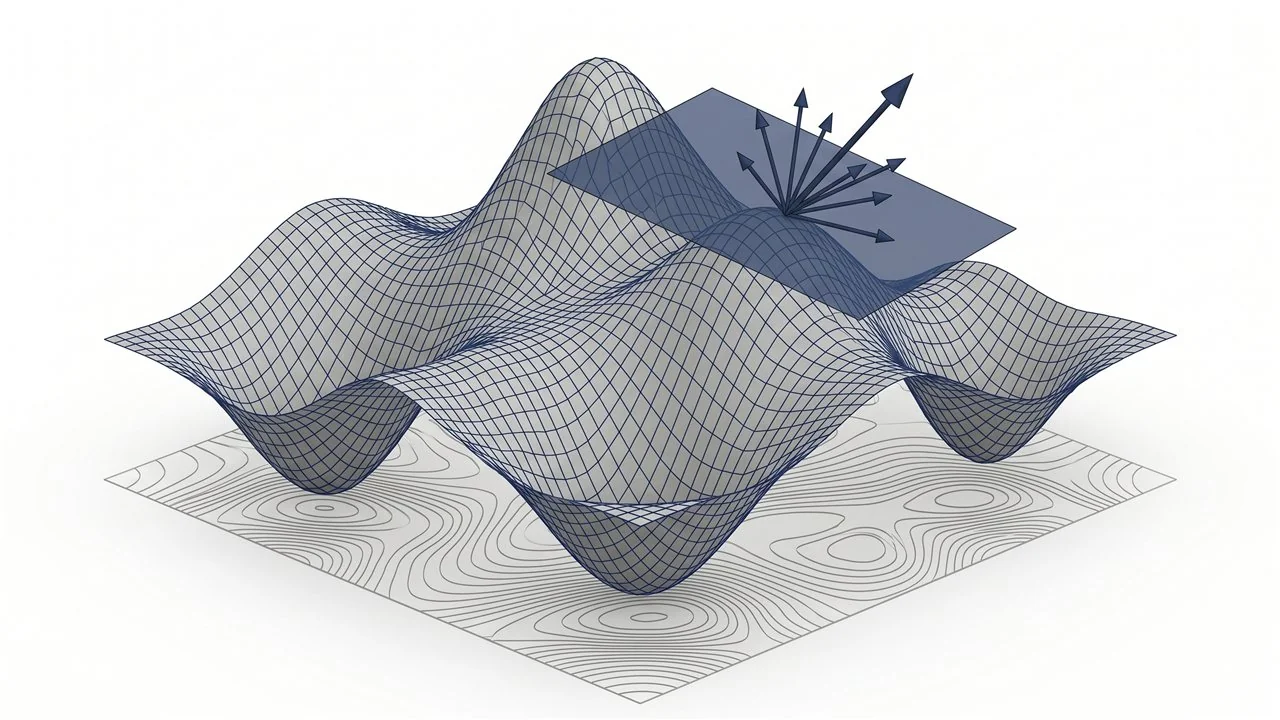
Analytical modelling
Parametric insights from first principles
Closed-form and semi-empirical models derived from first principles are often the most powerful tool in the workflow: they are computationally cheap, inherently differentiable, and expose parameter sensitivities and scaling laws that can be hidden inside a large numerical simulation. This makes them useful not only as standalone tools for problems like cycling aerodynamics, rolling resistance, or drivetrain efficiency, but also as fast inner models inside optimization formulations and as validation references for more expensive numerical results. The mathematics can carry the physics surprisingly far — and the derivatives come for free.
View simulations →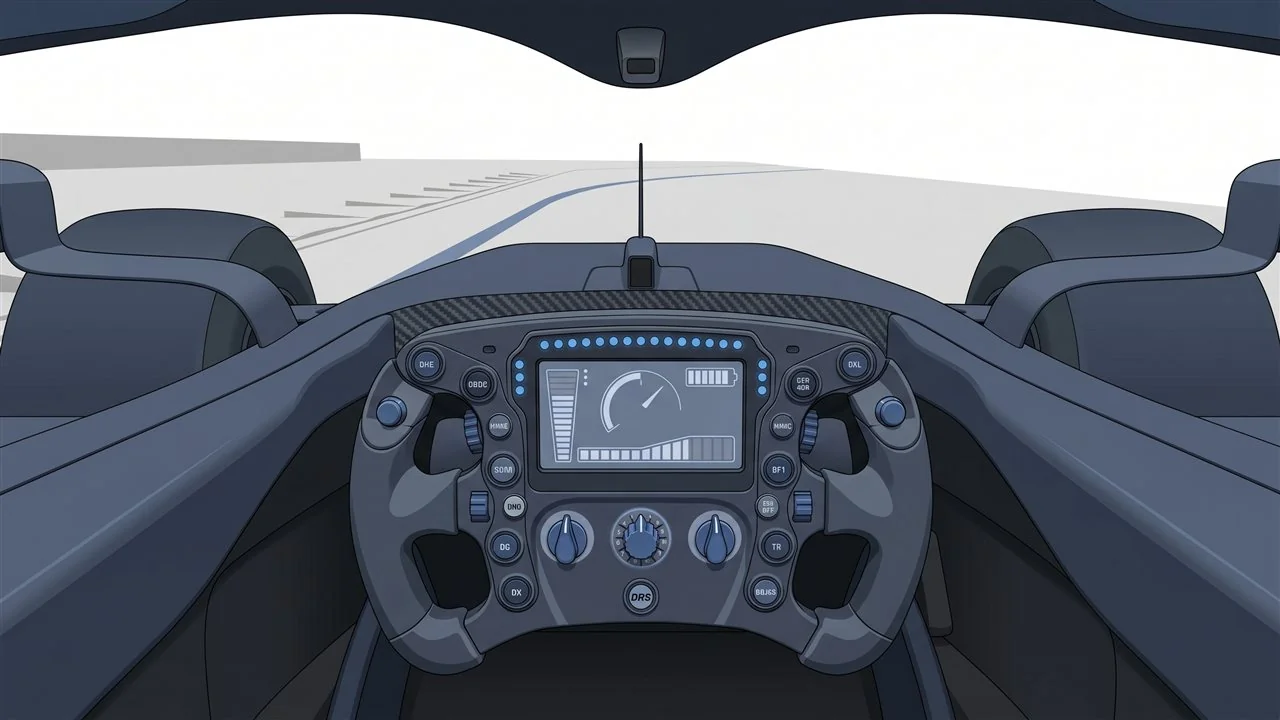
Optimal control
Optimal decisions under physical constraints
Optimal control asks not only "what does the system do?" but "what should it do?" — solving simultaneously for the system dynamics and the control actions that minimize a performance objective subject to physical constraints. In trajectory optimisation, those controls may be throttle, braking, power output, aerodynamic configuration, or rocket gimbal angle, chosen over a full time horizon rather than instant by instant. This framework naturally draws in other methods — analytical vehicle models, reduced-order drivetrain dynamics, aerodynamic approximations — because every unnecessary model complexity translates directly into optimization cost.
View simulations →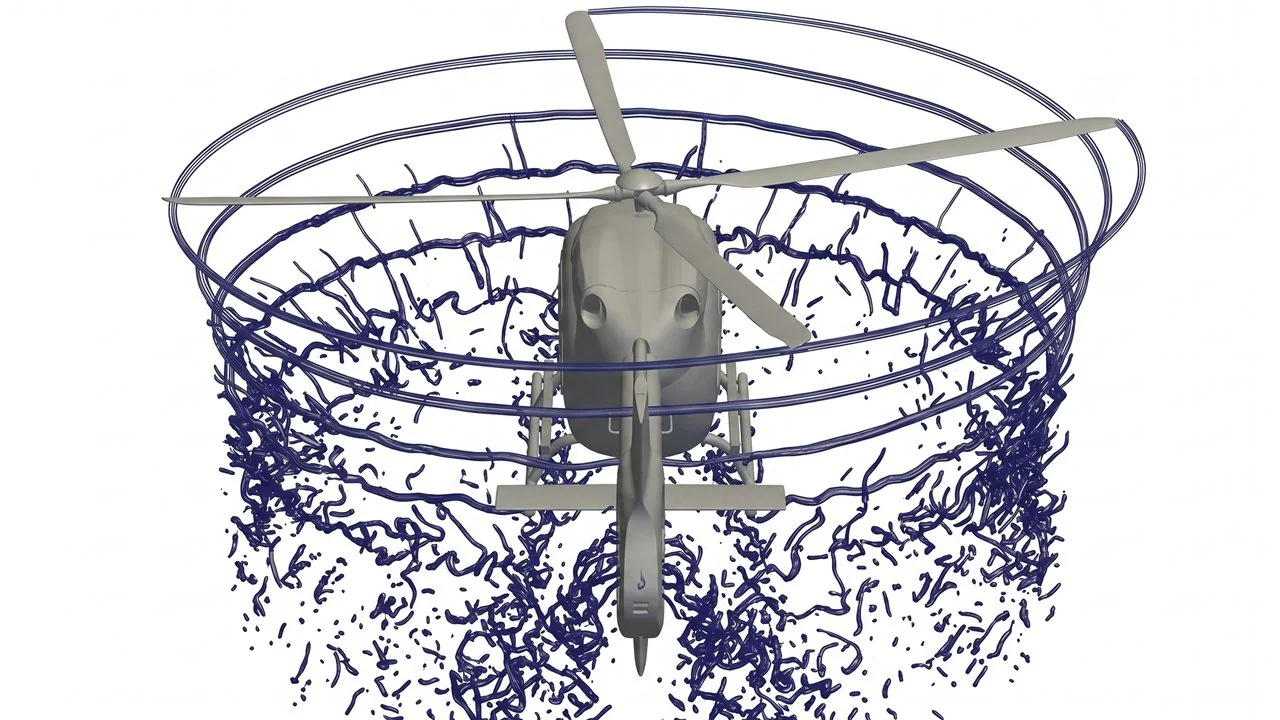
CFD & LBM
Aerodynamics and fluid-film modelling
Fluid models are used when the surrounding medium is part of the engineering problem: rotor and turbine blade aerodynamics, race-car and cyclist drag, lubricant films in gears and bearings, or rocket trajectories through the atmosphere. The right level of fidelity depends on the use case — vortex and blade-element methods for loads in multibody models, Reynolds thin-film solvers for lubrication, and GPU-accelerated Lattice Boltzmann simulation where transient 3D flow detail matters. LBM is particularly effective for complex geometries and unsteady flows where conventional CFD becomes impractical.
View simulations →